Miso chicken
2 boneless chicken thighs
1 Tbsp white miso
1 Tbsp sake or sweet sherry (can omit)
1/3 to 1/2 tsp brown sugar
You can use skinned or unskinned chicken. I like unskinned as I like the crispy skin. If you are marinating it overnight, use a zip lock bag and mix the marinating ingredients and spread over the meat. let marinate in If you don’t have time for this, let it marinate at least 10-15 minutes.
Pre-heat the oven to 200 deg C and place the marinated chicken on a baking tray covered with foil (makes it easier to wash later) for 15 mins on 1 side. Then bake for 15 mins on the other side and it's done!
Showing posts with label Japanese. Show all posts
Tuesday, 13 March 2012
Sunday, 5 February 2012
Chicken Karaage
Chicken Karaage - Healthy version
The original method calls for the chicken to be deep fried, but apart from using too much oil and spluttering around, deep fried is not very healthy is it? So, most times now, when something calls for it to be deep fried, I will bunk it in the oven. And to me, it tastes just as good and crispy and it will work as a bento dish as well, cos I kept a couple for the next day and it was still good!
Ingredients:
300gm boneless chicken thighs
1 2 inch piece fresh ginger - grated
3 Tbsp soy sauce
1 Tbsp sake or orange juice (for those who cannot take sake - or you can omit it)
about 1/2 cup Potato starch or cornstarch, (enough to coat the chicken. Potato starch is better, but cornstarch will do)
Method:
1.Cut up the chicken thighs into bite-sized pieces. You can remove the skin if you like, though it does make the chicken crispier.
2. Peel and grate the piece of ginger.
3. Put the chicken pieces in a bowl. Add the grated ginger, soy sauce and sake, and mix well. Let it marinate for a minimum of 10 minutes to around 30 minutes is ideal.
4. Once you are ready to cook the chicken, lightly oil (I use a spray oil) a baking tray, lightly starch the chicken and place on the cooking tray in a heated 200 deg oven for 15 mins on one side. After 15 mins, turn the pieces around to crisp the other side.
The original method calls for the chicken to be deep fried, but apart from using too much oil and spluttering around, deep fried is not very healthy is it? So, most times now, when something calls for it to be deep fried, I will bunk it in the oven. And to me, it tastes just as good and crispy and it will work as a bento dish as well, cos I kept a couple for the next day and it was still good!
Ingredients:
300gm boneless chicken thighs
1 2 inch piece fresh ginger - grated
3 Tbsp soy sauce
1 Tbsp sake or orange juice (for those who cannot take sake - or you can omit it)
about 1/2 cup Potato starch or cornstarch, (enough to coat the chicken. Potato starch is better, but cornstarch will do)
Method:
1.Cut up the chicken thighs into bite-sized pieces. You can remove the skin if you like, though it does make the chicken crispier.
2. Peel and grate the piece of ginger.
3. Put the chicken pieces in a bowl. Add the grated ginger, soy sauce and sake, and mix well. Let it marinate for a minimum of 10 minutes to around 30 minutes is ideal.
4. Once you are ready to cook the chicken, lightly oil (I use a spray oil) a baking tray, lightly starch the chicken and place on the cooking tray in a heated 200 deg oven for 15 mins on one side. After 15 mins, turn the pieces around to crisp the other side.
Tuesday, 6 September 2011
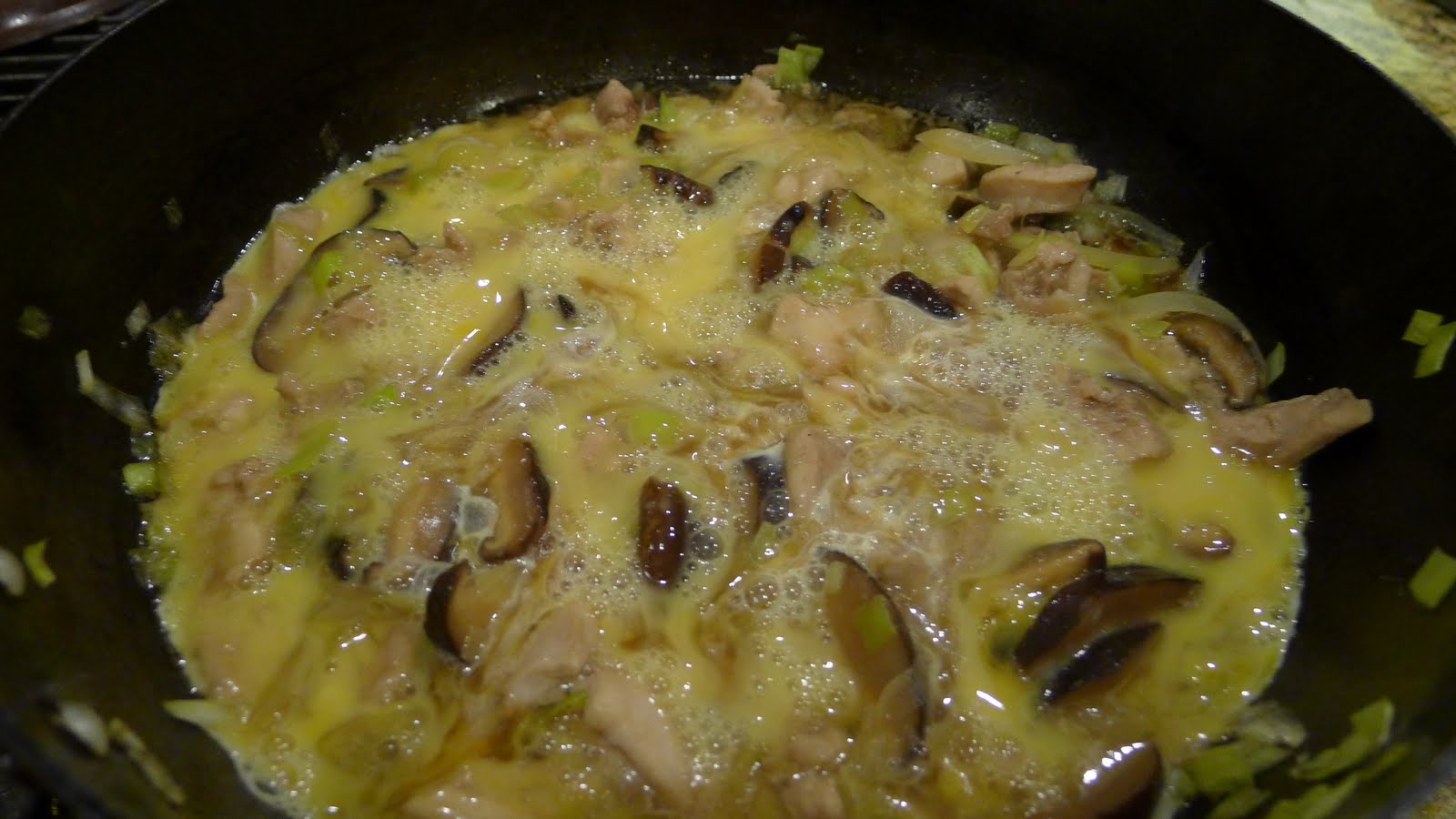
Oyako Don
Oyako Don (Halal)
This is another easy one pot Japanese rice dish. Oyako means mother and child, so it is chicken and egg and a donburi dish is where the food is piled onto rice.
Note: For the halal version, please omit the mirin which is sweet rice wine.
Ingredients: (for 2 persons)
2 Chicken thigh - cut into cubes
1/2 small leek - cut on the diagonal
1 onion - sliced
2 dried shitake mushrooms - soaked and sliced
1 tsp dashi
2 tbsp soya sauce )
2 tbsp mirin ) A
1/2 tsp sugar )
2 eggs - beaten
Method:
1. Heat oil, fry onions and leek for a couple of mins till translucent.

2. Add chicken, dried mushrooms and dashi and stir till mixed.


3. Add water from soaked mushroom and A. Simmer for about 10 mins till chicken is cooked.
4. Pour beaten eggs on top of chicken mixture. Cover pan till egg is set.

5. Top chicken mixture over rice.
This is another easy one pot Japanese rice dish. Oyako means mother and child, so it is chicken and egg and a donburi dish is where the food is piled onto rice.
Note: For the halal version, please omit the mirin which is sweet rice wine.
Ingredients: (for 2 persons)
2 Chicken thigh - cut into cubes
1/2 small leek - cut on the diagonal
1 onion - sliced
2 dried shitake mushrooms - soaked and sliced
1 tsp dashi
2 tbsp soya sauce )
2 tbsp mirin ) A
1/2 tsp sugar )
2 eggs - beaten
Method:
1. Heat oil, fry onions and leek for a couple of mins till translucent.
2. Add chicken, dried mushrooms and dashi and stir till mixed.

3. Add water from soaked mushroom and A. Simmer for about 10 mins till chicken is cooked.
4. Pour beaten eggs on top of chicken mixture. Cover pan till egg is set.
5. Top chicken mixture over rice.
Sunday, 4 September 2011
Spagetti Napolitan aka Japanese mee goreng
Spagetti Napolitan
Liana is now trying to learn to cook, so whenever she wants to cook her favourite foods and although the receipes are here, she will still message me to get more detailed instructions.
So far, she has made her 3 favourite Japanese dishes and her bf is saying that they taste good!
So Liana, here is another of your favourite recipes.
According to Wikipedia, Naporitan or Napolitan (ナポリタン) is the name of a pasta dish, which is popular in Japan. The dish consists of spaghetti, tomato ketchup or a tomato-based sauce, onion, button mushrooms, green peppers, sausage, bacon and Tabasco sauce. Naporitan is claimed to be from Yokohama.
It was created by Shigetada Irie (入江茂忠),[1], the general chef of the New Grand Hotel in Yokohama, when he was inspired by one of the military rationing of GHQ, which was spaghetti mixed with tomato ketchup.
The chef named the dish after Naples, Italy (hence "napoli"). However, no dish similar to the Japanese Naporitan is known to originate from Naples. Phonetically, the Japanese language does not contain the western "L" sound. Spellings in the Roman alphabet can vary. The spelling Naporitan is derived from the usual romanization of Japanese, while the spelling Napolitan takes the origin of the name into account#
I learnt to make this dish from a friend who used to own a coffee shop in Hakodate and this was one of the dishes on her menu!
Ingredients
Spaghetti - boiled till al dente
Onions (cut into wedges)
Mushrooms (sliced)
Sausages (cut on the slant)
Prawns
Tomato ketchup
worchester sauce
Some white wine or sake or water
Bell peppers (I left out because I didn't have any)
Method:
1. Heat a little oil in the pan and when hot, add onions and stir fry for a couple of minutes. Then add the sausages, mushrooms and what ever else you intend to add.
2. Add in your cooked spaghetti and tomato ketchup, wine or water and worchester sauce and stir till well mixed.
3. Add in the prawns and season.
Liana is now trying to learn to cook, so whenever she wants to cook her favourite foods and although the receipes are here, she will still message me to get more detailed instructions.
So far, she has made her 3 favourite Japanese dishes and her bf is saying that they taste good!
So Liana, here is another of your favourite recipes.
According to Wikipedia, Naporitan or Napolitan (ナポリタン) is the name of a pasta dish, which is popular in Japan. The dish consists of spaghetti, tomato ketchup or a tomato-based sauce, onion, button mushrooms, green peppers, sausage, bacon and Tabasco sauce. Naporitan is claimed to be from Yokohama.
It was created by Shigetada Irie (入江茂忠),[1], the general chef of the New Grand Hotel in Yokohama, when he was inspired by one of the military rationing of GHQ, which was spaghetti mixed with tomato ketchup.
The chef named the dish after Naples, Italy (hence "napoli"). However, no dish similar to the Japanese Naporitan is known to originate from Naples. Phonetically, the Japanese language does not contain the western "L" sound. Spellings in the Roman alphabet can vary. The spelling Naporitan is derived from the usual romanization of Japanese, while the spelling Napolitan takes the origin of the name into account#
I learnt to make this dish from a friend who used to own a coffee shop in Hakodate and this was one of the dishes on her menu!
Ingredients
Spaghetti - boiled till al dente
Onions (cut into wedges)
Mushrooms (sliced)
Sausages (cut on the slant)
Prawns
Tomato ketchup
worchester sauce
Some white wine or sake or water
Bell peppers (I left out because I didn't have any)
Method:
1. Heat a little oil in the pan and when hot, add onions and stir fry for a couple of minutes. Then add the sausages, mushrooms and what ever else you intend to add.
2. Add in your cooked spaghetti and tomato ketchup, wine or water and worchester sauce and stir till well mixed.
3. Add in the prawns and season.
Monday, 7 March 2011
Gyu maki
Gyu maki (Beef roll)
Had friends from Singapore who stayed a night at our place before going back to SG. Friday night, prepared niku jyaga, kinpira gobo and chicken karaage for them. No pictures though.
Then on Saturday, my intention was to send them to Windsor, go home buy some beef and they could then have roast beef and yorkshire pudding for dinner before leaving for the airport. But they asked me to hang around with them, which I did but then which left me with not much time to cook my roast beef, so ended up making gyu maki, squid in soya sauce and miso soup with tofu and wakame.
When you want to make a simple tofu and wakame miso soup, soak the wakame in cold water till it expands but do not add to the miso soup until you want to drink it, otherwise it become too soft.

Note: For halal version, please omit the mirin. (sweet rice wine)
Ingredients:
12 pcs of thinly sliced beef
half leek or negi - julienned
green pepper - julienned
carrot - julienned
3 tbsp soy sauce )
3 tbsp mirin ) sauce mixture
1 tbsp sugar )
Method:
1. On piece of sliced beef, lay equal amounts of leeks, peppers and carrots and roll tight.
2. When all the beef have been filled and rolled, heat a saucepan will 1 tbsp oil. When pan is hot, lay the beef in the pan.
3. Fry for a couple of mins till the beef is coloured, then turn it to colour the other side.
4. When beef has been coloured on all sides, add the sauce mixture.
5. Fry till sauce has reduced and caramelizes.
6. Remove and cut the beef into half diagonally and serve hot.


Gyu Maki before frying

Had friends from Singapore who stayed a night at our place before going back to SG. Friday night, prepared niku jyaga, kinpira gobo and chicken karaage for them. No pictures though.
Then on Saturday, my intention was to send them to Windsor, go home buy some beef and they could then have roast beef and yorkshire pudding for dinner before leaving for the airport. But they asked me to hang around with them, which I did but then which left me with not much time to cook my roast beef, so ended up making gyu maki, squid in soya sauce and miso soup with tofu and wakame.
When you want to make a simple tofu and wakame miso soup, soak the wakame in cold water till it expands but do not add to the miso soup until you want to drink it, otherwise it become too soft.

Note: For halal version, please omit the mirin. (sweet rice wine)
Ingredients:
12 pcs of thinly sliced beef
half leek or negi - julienned
green pepper - julienned
carrot - julienned
3 tbsp soy sauce )
3 tbsp mirin ) sauce mixture
1 tbsp sugar )
Method:
1. On piece of sliced beef, lay equal amounts of leeks, peppers and carrots and roll tight.
2. When all the beef have been filled and rolled, heat a saucepan will 1 tbsp oil. When pan is hot, lay the beef in the pan.
3. Fry for a couple of mins till the beef is coloured, then turn it to colour the other side.
4. When beef has been coloured on all sides, add the sauce mixture.
5. Fry till sauce has reduced and caramelizes.
6. Remove and cut the beef into half diagonally and serve hot.


Gyu Maki before frying

Thursday, 24 February 2011
Buta Jiru
Buta Jiru
Buta means pig an Jiru means soup, so literally pork soup!
Promised my friend Judy that I will show her how to make miso soup. Most of the miso soups that you get in restaurants are just tofu with seaweed, but in home cooking in Japan, almost anything can be thrown into the soup. For example, you can have:
sliced onions with beaten eggs
nameko (a kind of slimy mushrooms) with tofu
clams with tofu
cabbage with sliced pork
mange tout
These are just a few ideas, but what I made to show is called Buta Jiru. And because it was last minute, I only used what I could find in my pantry and freezer.
You can add burdock root or gobo as well.
Buta Jiru
Ingredients: for 4 ppl
Daikon - cut into quarters and sliced thinly
Carrots - ditto
Belly pork - sliced
Konnyaku - blanched in hot water for a few minutes and cut into slices
Dashi - 1 packet
Miso - 1 ladleful (you can use red or white, I used a combination of both)
Method:
1. Bring about 3 cupfuls of water to the boil and then add dashi.
2. Add all the ingredients and simmer till daikon has softened.
3. Lower the fire and you could either slowly stir the miso in the ladle to slowly dissolve it or use a strainer and strain the miso through.


Buta means pig an Jiru means soup, so literally pork soup!
Promised my friend Judy that I will show her how to make miso soup. Most of the miso soups that you get in restaurants are just tofu with seaweed, but in home cooking in Japan, almost anything can be thrown into the soup. For example, you can have:
sliced onions with beaten eggs
nameko (a kind of slimy mushrooms) with tofu
clams with tofu
cabbage with sliced pork
mange tout
These are just a few ideas, but what I made to show is called Buta Jiru. And because it was last minute, I only used what I could find in my pantry and freezer.
You can add burdock root or gobo as well.
Buta Jiru
Ingredients: for 4 ppl
Daikon - cut into quarters and sliced thinly
Carrots - ditto
Belly pork - sliced
Konnyaku - blanched in hot water for a few minutes and cut into slices
Dashi - 1 packet
Miso - 1 ladleful (you can use red or white, I used a combination of both)
Method:
1. Bring about 3 cupfuls of water to the boil and then add dashi.
2. Add all the ingredients and simmer till daikon has softened.
3. Lower the fire and you could either slowly stir the miso in the ladle to slowly dissolve it or use a strainer and strain the miso through.


Monday, 17 January 2011
turkey tsukune
Turkey Tsukune
It has been raining since last week and it's been dark and dreary everyday. Go to work in the dark, come home in the dark...Bleah!
It was still raining this morning and I was walking across the front lawn to my car and whoops... I did a skidder... hey like a footballer doing a save... fell on my bum. Got up, asked Pat who if my trousers looked ok, no mud or anything like that. No, he said, just looks wet, so thought ok, I can live with that as I could not be asked to go back to change. It was only when I got into work and looked down that I saw a patch of mud on my front right trousers! Yew.... been walking around like that, but the mind is funny like that isn't it, if you don't realise you don't feel conscious...
Anyway, made turkey tsukune last night. This is normally made with chicken mince but I thought I would go one step further and be a bit more healthy.
Ingredients:
450 gm minced turkey or chicken
2 tbsp panko (Japanese breadcrumbs)
1 onion chopped
1 egg (beaten)
1 Tbsp soy sauce
2 tsp mirin
Sauce Ingredients:
3 tbsp soy sauce
3 tbsp mirin
1 tsp sugar
1 cup water
1 tbsp cornflour
Method:
1.Put all ingredients in a bowl and mix well and make small meatballs.
2.Heat a pan of water till boiling and drop them in. They are cooked when they float.
3.Mix all the ingredients for the sauce together except for the corn flour. Pour into a saucepan and bring to a boil. Add some water to the corn flour, mix well and add to the mixture. Stir well.
4. Add the boiled turkey balls and boil for a few minutes to coat them. They can be served and eaten at this stage.
I go a step further and put some oil in a grill pan. When the oil is hot, add some meatballs and fry till they the sugar caramalise.

It has been raining since last week and it's been dark and dreary everyday. Go to work in the dark, come home in the dark...Bleah!
It was still raining this morning and I was walking across the front lawn to my car and whoops... I did a skidder... hey like a footballer doing a save... fell on my bum. Got up, asked Pat who if my trousers looked ok, no mud or anything like that. No, he said, just looks wet, so thought ok, I can live with that as I could not be asked to go back to change. It was only when I got into work and looked down that I saw a patch of mud on my front right trousers! Yew.... been walking around like that, but the mind is funny like that isn't it, if you don't realise you don't feel conscious...
Anyway, made turkey tsukune last night. This is normally made with chicken mince but I thought I would go one step further and be a bit more healthy.
Ingredients:
450 gm minced turkey or chicken
2 tbsp panko (Japanese breadcrumbs)
1 onion chopped
1 egg (beaten)
1 Tbsp soy sauce
2 tsp mirin
Sauce Ingredients:
3 tbsp soy sauce
3 tbsp mirin
1 tsp sugar
1 cup water
1 tbsp cornflour
Method:
1.Put all ingredients in a bowl and mix well and make small meatballs.
2.Heat a pan of water till boiling and drop them in. They are cooked when they float.
3.Mix all the ingredients for the sauce together except for the corn flour. Pour into a saucepan and bring to a boil. Add some water to the corn flour, mix well and add to the mixture. Stir well.
4. Add the boiled turkey balls and boil for a few minutes to coat them. They can be served and eaten at this stage.
I go a step further and put some oil in a grill pan. When the oil is hot, add some meatballs and fry till they the sugar caramalise.

Sunday, 9 January 2011
Curry rice from scratch
Japanese Curry rice from scratch
When I was back in Singapore last year, I had a conversation with D and E and was telling them that I would experiment with making Japanese curry rice from scratch and if I was successful, I would post it and inform them.
Sorry ladies that it has taken so long for me to try it out. But as the saying goes -"better late than never" right?
I tried making it using the roux method and it did work and Pat liked it, so it must be a success then!
Ingredients:
(For roux)
50 gms butter
2 tbsp plain flour
chicken or beef stock
Meat curry powder
1 onion (sliced)
button mushrooms (sliced)
beef or chicken (sliced or cubed - your preference)
Boil beef before hand to tenderize it
Carrot - big cubes
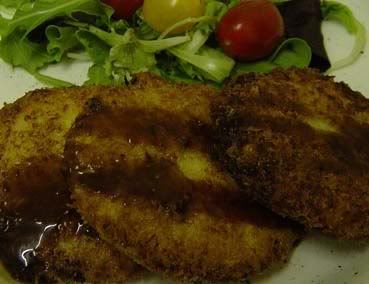
potatoes - big cubes
Fukushinsuke (pickles to go with Japanese curry)
Method:
1. Melt butter in saucepan, add sliced onions.Fry till translucent.
2. Using a wire whisk, stir the butter-flour mixture until it bubbles. This is called a roux.
3.Cook and stir the roux for 1-2 minutes. This gets rid of the raw flour taste and allows the starch granules in the flour to accept the liquid.
4. Add in your desired amount of curry powder and stir until well mixed.
5. Add in your stock and whisk well.
6. Add in your potatoes, carrots and beef and simmer till beef is tender. Lastly if you are using mushrooms, add in the mushrooms.
7. If the curry gets a bit thick, add in a bit more stock or water or even milk.
8. Serve with Japanese rice and fukushinsuke on the side.
When I was back in Singapore last year, I had a conversation with D and E and was telling them that I would experiment with making Japanese curry rice from scratch and if I was successful, I would post it and inform them.
Sorry ladies that it has taken so long for me to try it out. But as the saying goes -"better late than never" right?
I tried making it using the roux method and it did work and Pat liked it, so it must be a success then!
Ingredients:
(For roux)
50 gms butter
2 tbsp plain flour
chicken or beef stock
Meat curry powder
1 onion (sliced)
button mushrooms (sliced)
beef or chicken (sliced or cubed - your preference)
Boil beef before hand to tenderize it
Carrot - big cubes
potatoes - big cubes
Fukushinsuke (pickles to go with Japanese curry)
Method:
1. Melt butter in saucepan, add sliced onions.Fry till translucent.
2. Using a wire whisk, stir the butter-flour mixture until it bubbles. This is called a roux.
3.Cook and stir the roux for 1-2 minutes. This gets rid of the raw flour taste and allows the starch granules in the flour to accept the liquid.
4. Add in your desired amount of curry powder and stir until well mixed.
5. Add in your stock and whisk well.
6. Add in your potatoes, carrots and beef and simmer till beef is tender. Lastly if you are using mushrooms, add in the mushrooms.
7. If the curry gets a bit thick, add in a bit more stock or water or even milk.
8. Serve with Japanese rice and fukushinsuke on the side.
Friday, 31 July 2009
Tamago Yaki - Japanese egg roll
Tamago Yaki - Japanese Egg Roll
I thought it would be nice to do a step by step tutorial for making Tamago yaki.
Ingredients:
4 eggs - lightly beaten
6 tbsp dashi stock
1 tbsp sugar
2/3 tsp soy sauce
Method:
Mix all ingredients together. Grease pan with some oil.
Pour egg mixture to cover bottom of pan.

Roll egg to the bottom of pan.

Push egg back to the top of the pan and pour in another tablespoon or 2 to cover pan again. As you push the egg, try to shape it into an oblong.

Repeat process till all the egg is used up.

I thought it would be nice to do a step by step tutorial for making Tamago yaki.
Ingredients:
4 eggs - lightly beaten
6 tbsp dashi stock
1 tbsp sugar
2/3 tsp soy sauce
Method:
Mix all ingredients together. Grease pan with some oil.
Pour egg mixture to cover bottom of pan.
Roll egg to the bottom of pan.
Push egg back to the top of the pan and pour in another tablespoon or 2 to cover pan again. As you push the egg, try to shape it into an oblong.
Repeat process till all the egg is used up.
Friday, 15 May 2009
Crab and corn gratin
Spinach and Crab Gratin
Today I had planned to make crab and sweet corn croquettes. But by the time I got home, boiled the potatoes, made the roux for the croquette, etc, etc, it was almost 8pm. (I got home at 7.15, btw). So I was thinking by the time I got the roux to cool down, my poor dears will only be having their dinner around 8.45. The roux has to cool down sufficiently for it to gel together to form into croquettes. I boiled the potatoes to make potato salad.
Ok, ok, change of plan. Decided to concoct a gratin dish then. Tada, my Spinach and crab gratin!
Ingredients:
2 potatoes (depending on size)
1 can crab meat
1 can sweet corn
150 gm button mushrooms, sliced
1 onion sliced
25 gm butter
2 tbsp plain flour
Chicken cube
Milk
Grated Parmesan cheese
Spinach - blanched and squeezed dry
Method.
1. Skin potatoes, cut into cubes and boil till soft. Remove from heat and drain.
2. Melt butter in frypan, add onions and mushrooms. Fry till onions and mushrooms are soft.
3. Add crabmeat and sweet corn and stir. Add in the flour and fry till well mixed. Add in the chicken cube. Add in milk to make a roux and stir throughly. Stir for about 5 mins. Mixture should be gooey and not too thin. If it is, then add a bit more flour to thicken the mixture.
4. Mash the potatoes and add some butter and milk. Stir to mix. Add seasoning.
5. Spread the spinach on the bottom of a pyrex or heat proof dish. Pour the crab mixture on top of it. Add the mashed potato and lastly add grated parmesan cheese on top.
6. Bake in preheated oven - 200 deg C until top is brown and bubbling.
Today I had planned to make crab and sweet corn croquettes. But by the time I got home, boiled the potatoes, made the roux for the croquette, etc, etc, it was almost 8pm. (I got home at 7.15, btw). So I was thinking by the time I got the roux to cool down, my poor dears will only be having their dinner around 8.45. The roux has to cool down sufficiently for it to gel together to form into croquettes. I boiled the potatoes to make potato salad.
Ok, ok, change of plan. Decided to concoct a gratin dish then. Tada, my Spinach and crab gratin!
Ingredients:
2 potatoes (depending on size)
1 can crab meat
1 can sweet corn
150 gm button mushrooms, sliced
1 onion sliced
25 gm butter
2 tbsp plain flour
Chicken cube
Milk
Grated Parmesan cheese
Spinach - blanched and squeezed dry
Method.
1. Skin potatoes, cut into cubes and boil till soft. Remove from heat and drain.
2. Melt butter in frypan, add onions and mushrooms. Fry till onions and mushrooms are soft.
3. Add crabmeat and sweet corn and stir. Add in the flour and fry till well mixed. Add in the chicken cube. Add in milk to make a roux and stir throughly. Stir for about 5 mins. Mixture should be gooey and not too thin. If it is, then add a bit more flour to thicken the mixture.
4. Mash the potatoes and add some butter and milk. Stir to mix. Add seasoning.
5. Spread the spinach on the bottom of a pyrex or heat proof dish. Pour the crab mixture on top of it. Add the mashed potato and lastly add grated parmesan cheese on top.
6. Bake in preheated oven - 200 deg C until top is brown and bubbling.
Saturday, 2 May 2009
Friday, 1 May 2009
Chirashi sushi
Tuesday, 7 April 2009
Fried Shirataki
Fried Shirataki
Decided to go slow on carbs for the next 2 weeks, so made Fried Shiratki with mixed vegetables for dinner.
Shirataki in itself has no calories and no taste but like a sponge takes up whatever taste you cook it in. So cooked in soy sauce and mirin and then added vegetables for crunch.
Decided to go slow on carbs for the next 2 weeks, so made Fried Shiratki with mixed vegetables for dinner.
Shirataki in itself has no calories and no taste but like a sponge takes up whatever taste you cook it in. So cooked in soy sauce and mirin and then added vegetables for crunch.
Saturday, 31 January 2009
Gyudon
Liana requested for Gyudon and Chawan Mushi so here it is.
Gyudon

Ingredients:
2 cups steamed Japanese rice
500gm thinly sliced beef
1 onion
1 1/2 cups dashi soup
5 tbsp soy sauce
3 tbsp mirin
2 tbsp sugar
1 tsp sake
*benishoga (red ginger) for topping
shichimi mixed 7 chill and spices
Method:
1. Cook Japanese rice.
2. Slice onion thinly. Cut beef into bite-sized pieces.
3. Put dashi, soysauce, sugar, mirin, and sake in a pan. Add onion slices in the pot and simmer for a few minutes.
4. Add beef in the pan and simmer for a few minutes. Serve hot steamed rice in a deep rice bowl. Put the beef topping on the top of rice. Place some benishoga (red ginger) on the top and shichimi (optional)
Chawan Mushi

Ingredients:
3 eggs
3 cups dashi (1 tsp hondashi in 3 cups boiling water)
2 tsps shoyu
2 tsps mirin
prawns )
dried shitake mushrooms ) marinate in 2 tsps sake
ginko nuts )
japanese fishcake )
mistuba leaves (optional)
Method:
1. Beat eggs with fork or chopsticks. Do not beat too vigourously as you do not want to create bubbles in the final product. When dashi has cooled down, add to beaten eggs. Add shoyu and mirin to egg mixture.
2. Sift egg mixture through muslin cloth or if no cloth available then through a fine sift.
3. Add ginko nuts and fishcake at bottom of chawan mushi container. Then pour egg mixture in. Steam egg custard for about 8 mins till lightly cooked, then place prawns and shitake mushroom on top of this. Add the mitsuba leaves as well if available. Steam for another 8 - 10 mins and then it is done.
Note: The reason for placing the prawns on top of the custard is purely for decoration purposes or you can just put it at the bottom of the container and let it be a treasure hunt!
Gyudon
Ingredients:
2 cups steamed Japanese rice
500gm thinly sliced beef
1 onion
1 1/2 cups dashi soup
5 tbsp soy sauce
3 tbsp mirin
2 tbsp sugar
1 tsp sake
*benishoga (red ginger) for topping
shichimi mixed 7 chill and spices
Method:
1. Cook Japanese rice.
2. Slice onion thinly. Cut beef into bite-sized pieces.
3. Put dashi, soysauce, sugar, mirin, and sake in a pan. Add onion slices in the pot and simmer for a few minutes.
4. Add beef in the pan and simmer for a few minutes. Serve hot steamed rice in a deep rice bowl. Put the beef topping on the top of rice. Place some benishoga (red ginger) on the top and shichimi (optional)
Chawan Mushi
Ingredients:
3 eggs
3 cups dashi (1 tsp hondashi in 3 cups boiling water)
2 tsps shoyu
2 tsps mirin
prawns )
dried shitake mushrooms ) marinate in 2 tsps sake
ginko nuts )
japanese fishcake )
mistuba leaves (optional)
Method:
1. Beat eggs with fork or chopsticks. Do not beat too vigourously as you do not want to create bubbles in the final product. When dashi has cooled down, add to beaten eggs. Add shoyu and mirin to egg mixture.
2. Sift egg mixture through muslin cloth or if no cloth available then through a fine sift.
3. Add ginko nuts and fishcake at bottom of chawan mushi container. Then pour egg mixture in. Steam egg custard for about 8 mins till lightly cooked, then place prawns and shitake mushroom on top of this. Add the mitsuba leaves as well if available. Steam for another 8 - 10 mins and then it is done.
Note: The reason for placing the prawns on top of the custard is purely for decoration purposes or you can just put it at the bottom of the container and let it be a treasure hunt!
Wednesday, 14 January 2009
Crab and corn croquette
Crab and Corn Croquette

Ingredients
2 tbsp flour
2 tbsp fresh cream
250 ml milk
A
3 large potatoes - cooked in boiling water till soft then mashed - cooled
200 gms crab meat - fresh or canned
1 can sweet corn )
1 onion - sliced ) can be omitted
30 gms butter
salt and pepper to taste
B
flour
1 beaten egg
panko (japanese breadcrumbs)
Method:
1. Heat butter in fry pan, then add the flour, stir until well mixed. Then slowly add the milk a little at a time and stir till lump free. Add cream.
2. Add ingredients A and mix well. Leave to cool.
3. When mixture is finally cool, shape into cutlets or balls or any shape you wish and coat in flour. Then dip into beaten egg and finally coat with panko.
4. As the ingredients are more or less cooked, you do not need to deep fry the croquettes. Just shallow fry till golden brown and dish out.
Ingredients
2 tbsp flour
2 tbsp fresh cream
250 ml milk
A
3 large potatoes - cooked in boiling water till soft then mashed - cooled
200 gms crab meat - fresh or canned
1 can sweet corn )
1 onion - sliced ) can be omitted
30 gms butter
salt and pepper to taste
B
flour
1 beaten egg
panko (japanese breadcrumbs)
Method:
1. Heat butter in fry pan, then add the flour, stir until well mixed. Then slowly add the milk a little at a time and stir till lump free. Add cream.
2. Add ingredients A and mix well. Leave to cool.
3. When mixture is finally cool, shape into cutlets or balls or any shape you wish and coat in flour. Then dip into beaten egg and finally coat with panko.
4. As the ingredients are more or less cooked, you do not need to deep fry the croquettes. Just shallow fry till golden brown and dish out.
Subscribe to:
Posts (Atom)